
By Andryce Andres / June 2026
Play is a child’s work.
Play is a form of expression.
It is the thread that weaves a tapestry of language, logic, empathy, reflection, creativity, imagination, personal insight, sustained attention, self‑advocacy, negotiation, relationship‑building, emotional understanding, and the development of their human body, brain, and Heart.
Through play, children rehearse the skills of being human.
They test ideas, stretch their imaginations, practice boundaries, and discover what brings them joy. Play is not a break from learning – it is learning.
It is the way children make sense of themselves and the world, moment by moment, gesture by gesture, story by story.
Play is where communication blooms. It is where children learn to listen, to lead, to follow, to repair, to imagine new possibilities. It is where they learn that their ideas matter, their voices matter, and their needs deserve to be honored.
“Children’s play is about children – their expression of themselves in relation to the world around them and what they hold as true inside themselves.” (Butler, 2022)
In essence, play is both a mirror and a doorway: a mirror that reflects the child’s becoming, and a doorway into the world they are learning to navigate.
As we grow from children into adults, play changes shape.
It becomes more than expression; it becomes sanity, survival, a way back to ourselves.
“The opposite of play isn’t work – it’s depression.” (Dingfelder, 2024)
Play may look light, but it is ancient and essential, woven into the biology of mammals, perhaps all vertebrates – as necessary as sleep, as grounding as breath.
Play is the spark behind human’s greatest inventions, our art, our science, our leaps of innovation.
It is how we practice meeting uncertainty with courage.
And in adulthood, play becomes a form of love.
It builds relationships, sustains them, softens them.
Social play is cooperative – its goal is not to win, but to keep the game alive.
Take turns. Make room. Stay curious. Invite others.
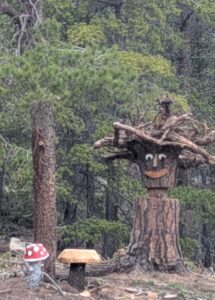

Adult play invites inclusivity, creativity, adaptability, and shared humanity.
It reminds us that joy is intelligence, and imagination is a lifelong survival skill.
May we look to children for inspiration, inviting the inner child in each of us to play.
May we sink into play together, connecting with one another and back to ourselves.
May we join children in their work to rediscover our own humanity, sharing in the joy and beauty of what it means to be alive.
Come, join us in play!