
Something Different
By Andryce Andres / March 2026
There are four ways of knowing (Plotkin, 2007).
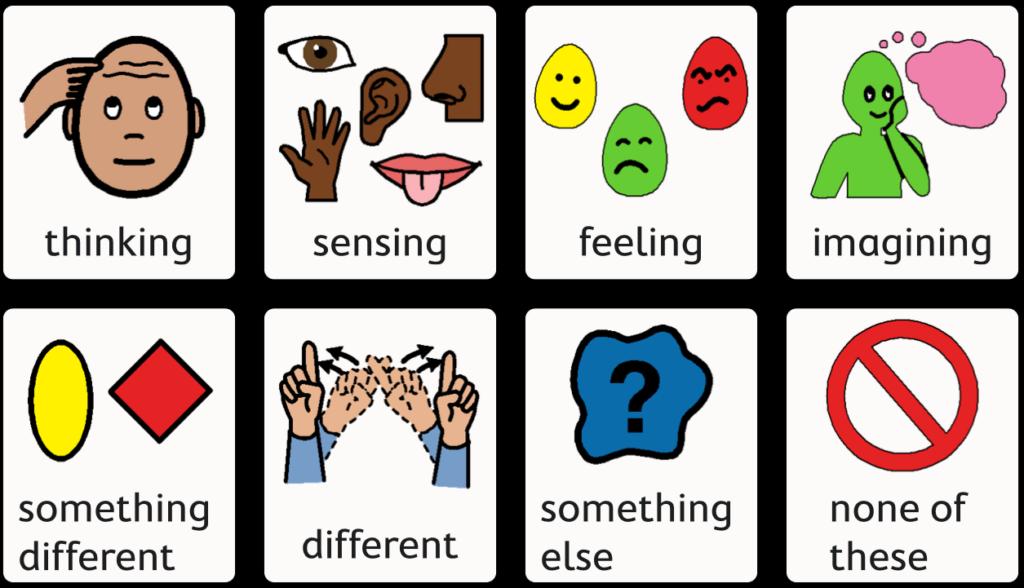
The first is thinking – the way many of us are most familiar with. We analyze, read, and make sense of the world through ideas and logic.
The second is sensing – knowing through our bodies and our senses. Through observation, seeing, hearing, touching, smelling. We take in the world as it is, moment by moment.
The third is feeling – knowing through emotion. Through joy, grief, anger, and excitement, we come to understand not only ourselves, but others. We intuit what is carried in tone, expression, movement, and presence.
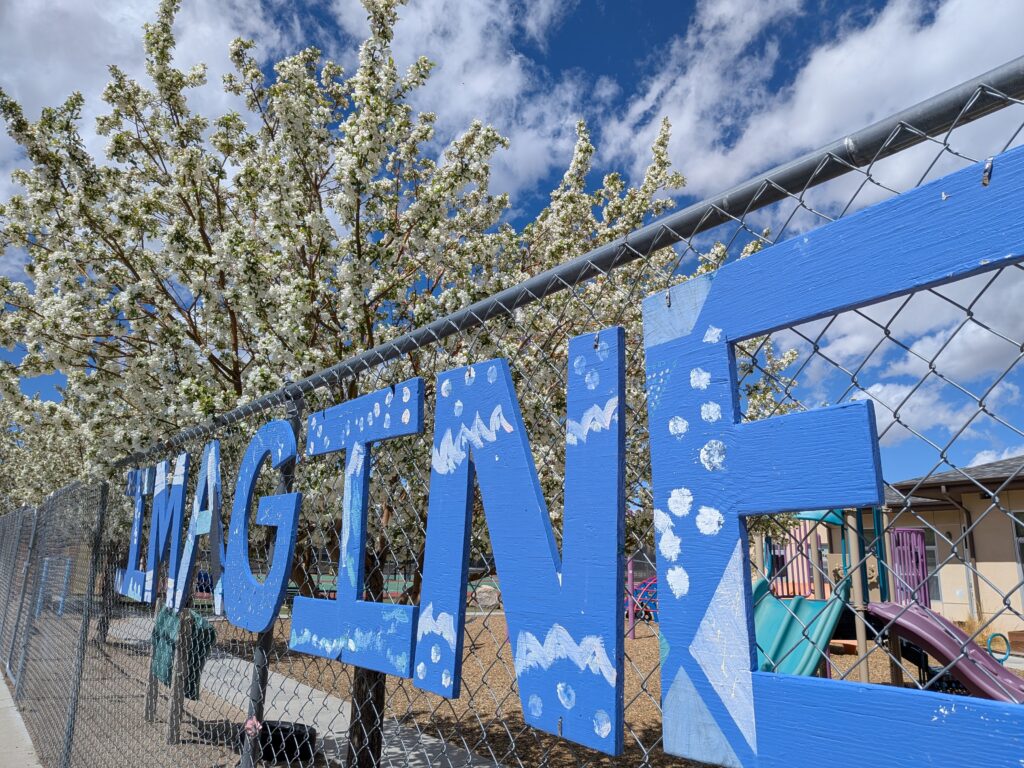
And the fourth is imagination.
Through imagination, we step beyond what is seen or known. We wonder. We create. We place ourselves in another’s experience. In children’s play, we hear it often: What if? Maybe… One idea builds on another – yes, and… – until something new begins to form.
Imagination is collaborative. It stretches beyond the expected. It makes space for possibility.
Imagination is deeply important when supporting individuals who use AAC.
As communication partners, we may scan words one by one, offering choices. But alongside those options, we must also offer something more: something different.
Because in offering “something different”, the finite becomes infinite.
Plotkin, B. (2007). Nature and the human soul: Cultivating wholeness and community in a fragmented world. Novato, CA: New World Press.